

Azadi Tower History
Azadi Tower History
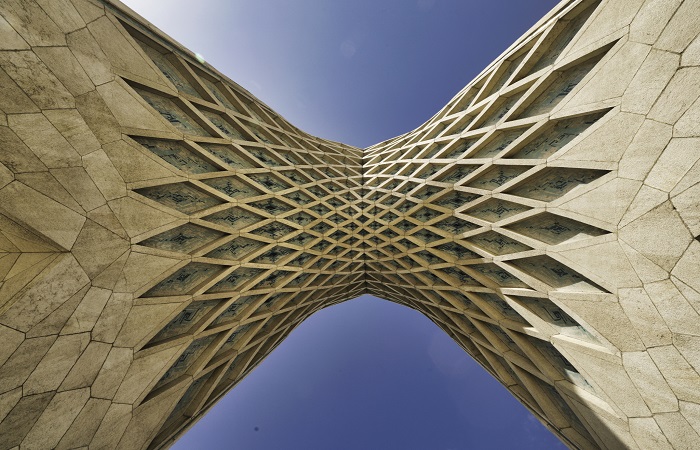
Azadi tower history is to be briefly discussed in the present text. The Azadi Tower (Freedom Tower), formerly known as the Shahyad Tower (Shah’s Memorial Tower), is a monument located on Azadi Square in Tehran, Iran. It is one of the landmarks of Tehran. It markes the west entrance to the city. And is part of the Azadi Cultural Complex, which also includes an underground museum.
Azadi Tower Hight
The tower is about 45 metres (148 ft) tall and is completely clad in cut marble. It was commissioned by Mohammad Reza Pahlavi, the last Shah of Iran, to mark the 2,500th year of the foundation of the Imperial State of Iran and completed in 1971.
Hossein Amanat
After winning a competition, architect Hossein Amanat was tasked to design the tower. His ideas were based upon classical and post-classical Iranian architecture, popular influences on art in the 1960s following the White Revolution. Iran’s increasing wealth sparked modernization programs and sent the art industry into a renaissance-like period.
Naming Azadi Tower
The first name associated with this monument was Darvāze-ye Kuroš meaning Gate of Cyrus, and at the time of the Centenary Celebrations, Asadollah Alam, who chaired the Council of Celebrations, referred to the monument as Darvāze-ye Šāhanšāhi meaning Imperial Gate. The monument’s ultimate official name was decided before the announcement of the competition for the monument’s design in September 1966. Bahram Farahvashi, a scholar and professor of ancient Iranian languages who worked with the Council of Celebrations, came up with the officially designated name of the structure, Šahyād Āryāmehr. Built in 1971 in commemoration of the 2,500th year of the foundation of the Imperial State of Iran, this gateway was named the Šahyād meaning Shah’s Memorial, but was later renamed Āzādi (“Freedom”) following the 1979 Revolution.
Azadi Tower Construction
During the 1960s, Iran became a major oil-exporting country. Using the newly-found wealth, the Shah launched programs to modernize and industrialize the country. This followed a cultural growth that architect Hossein Amanat describes as a mini renaissance. In 1966, Amanat won a competition to design the building.
Marble from Isfahan Province
Built with white marble from Isfahan Province, the monument includes 8,000 blocks of stone. The stones were all located and supplied by Ghanbar Rahimi, who was well known for his extensive knowledge of quarries, often known as the Soltān-e Sang-e Irān meaning Iran’s Sultan of Stone. Computers were used to define its complex woven surfaces, which, at the time, was a new technological technique. The main contractor for the construction of the tower was the MAP Company, supervised by Ghaffar Davarpanah Varnosfaderani, a renowned Iranian stonemason. The project was mainly funded by a group of five hundred Iranian industrialists. According to a report by MEED, the construction cost about six million dollars.
Opening Tower to Public
On October 16, 1971, the inauguration of the tower took place. However, it was not until January 14, 1972 that the tower was open to the public. The iconic Martyrs’ Memorial in Algiers, which was built in 1982, shows a strong influence by this monument.
Azadi Tower Importance
Visitors who fly domestically will catch a bird’s-eye view of this gatekeeper before landing at Tehran Mehrabad International Airport and being swept up by the maelstrom of traffic around the massive square. By taking the stairs or elevator to the top, you can behold buzzing, modern-day Tehran. The crypt museum, on the other hand, displays various ancient cuneiform tablets, ceramics, and pottery, as well as a replica of the Cyrus Cylinder.
Sources
en.wikipedia.org/wiki/Azadi_Tower
theculturetrip.com/middle-east/iran/articles/a-brief-history-of-azadi-tower-tehran/
Article


Natural Stone Applications
- 22 December 2022

Iranian Stones Introduction According to Source and Quarry
- 21 December 2022
Technical Stone Introduction and Quarrying Procedures
- 21 December 2022


Categories
- blog757
- news1
- Specialized articles756
Projects