

Key Elements of Interior Design
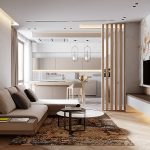
Interior design is a process that provides its people with a set of aesthetically pleasing but efficient solutions for a better use of the space in question. The goal of interior design is to improve the user experience by better managing the space available in the intervened environment.
Importance of Interior Design Elements
As the old saying goes, the whole is more than the sum of its parts. The same thing is true for interior design which is really just an illusion created by balancing different elements effectively. Learning about the ingredients that go into your favorite recipes will help you master cooking. In the same way, learning about the design elements that go into your favorite styles will help you master decorating.
Key Elements of Interior Design
So what are the key elements of interior design. Let’s see.
Color Element
Element of Color is the first element of interior design to be introduced here. Color is more than just an aesthetic choice. It can also influence the entire mood and feeling of a space. For example, most people think of red as a passionate or intense hue, while blues and greens are usually perceived as tranquil or soothing and yellow is often associated with words like happy and optimistic. Think about not only your visual preferences, but also, the sort of energy or attitude you’re trying to cultivate when deciding on a color scheme for your room.
Form
Form is simply another term for shape, expressing the contours of any artwork, furniture, or other 3-D object you could imagine. Furniture, sculpture, and even rooms themselves can take on two types of forms: organic forms (which are natural and irregular, with curvy or abstract shapes), and geometric forms (which feature sharp, man-made lines and edges, like squares or triangles).
Light
Have you ever cringed at a photograph that was taken in bad lighting? Then you already know the power that lighting has to affect our perception! Quality lighting is integral to any space, whether its sources are natural, man-made, or some combination of both. When choosing lighting for your room, think about factors like the color of the light, the light intensity, and whether the light should be dimmable.
Line
Think of line as the perimeter around a form or shape. For example, if you were to draw any object in the room, you would probably start with its outline. Lines can be vertical (up-and-down), horizontal (side-to-side), or dynamic (lines that express motion, like zig-zags or curlicues). Design experts say that horizontal lines create a feeling of security, while vertical lines are expressive and bold. Dynamic lines, which follow their own set of rules, can add a fun, exciting touch to any space when used strategically.
Pattern
A pattern is the intentional repetition of forms, lines, or other design elements. Patterns usually pop up on wallpaper or fabrics, but can appear anywhere in the home, even in the use of light or other design elements. While patterns can add life and motion to a space, too many clashing patterns can start to look chaotic, so tread lightly when choosing your favorite prints.
Texture
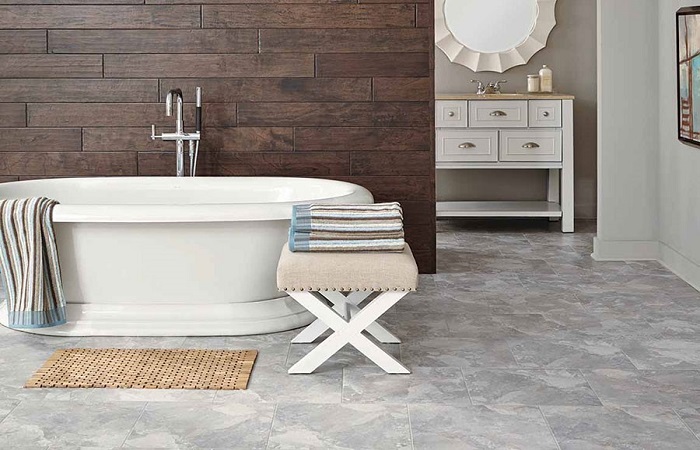
Not to be confused with pattern, texture is the way an object feels. This can mean the way the object literally feels to the touch, or the sense it gives when simply observing the object. For example, you might say that a surface looks weathered or vintage without actually touching it, thanks to the creative use of texture. Careful consideration of texture is especially important in parts of the home that you contact frequently, like your flooring. We can help you find floors with the perfect, comfortable texture to start every day on the right foot.
Space
Last but not least, space is at the heart of virtually every design decision. There are two basic types of space to consider: 2-D space (which accounts for the length and width of a room), and 3-D space (which covers height). For example, only 2-D space is important when thinking of carpets or rugs — but you’ll need to think about 3-D space before adding new shelving or furniture. It’s also important to leave enough empty or negative space to allow for fluid, easy navigation.
Final Statement
One of the most common misconceptions about interior design is that it is only reserved for the rich and famous. Yes, the profession of an interior designer might be a result of the eagerness of the elite to make their homes larger than life by bringing the luxury and opulence of the movie sets into their personal spaces, but the industry has gone a very long way since.
To learn more about us, click here.
Send your price quotes directly to our WhatsApp through this Link: https://wa.link/ord5k8
Sources
www.flooringamerica.com/blog/7-elements-of-interior-design
www.essentialhome.eu/inspirations/interiors-decor/importance-interior-design
blog.sampleboard.com/importance-of-interior-design-to-human-wellbeing/