

Numerous Differences between Solid Surface and Quartz
Numerous differences between solid surface and quartz are to be explained in the present passage. Clients are often faced with a great dilemma when going through materials for kitchen countertops, which are easy on the eyes, have good resale value, serve them well, and are resistant to heat. Namely, you will almost certainly end up confused between two options solid surface countertops against quartz countertops.
Quartz and Solid Surface
Two of those materials often get confused for one another are quartz and solid surface. Both can sometimes have similar color patterns and appearances, and both are far lower maintenance than a natural stone countertop. But there are numerous differences between solid surface and quartz as well, which homeowners need to understand in order to decide which one is right for their home.
How They’re Made
The biggest difference between the two materials is how they’re made and what they’re made of. While the two materials are both man-made, they couldn’t be more different in how.
Quartz Production
Quartz is made of roughly 93% natural quartz stone. Natural quartz stone is one of the strongest materials in home use. This quartz is mixed with polymer resins for binding, as well as pigments that give it its appearance, style, and patterns. Once it’s set, the final countertop is solid and heat resistant.
Solid Surface Production
Solid surface material is made of acrylics or polyester-based plastics, which are heated until melting, then poured into a mold. The finished countertop has a slightly softer feel to it than quartz, and may be thinner with a built-up edge to give the appearance of thickness.
How They Look
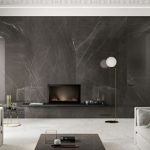
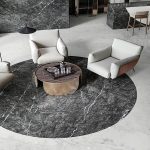
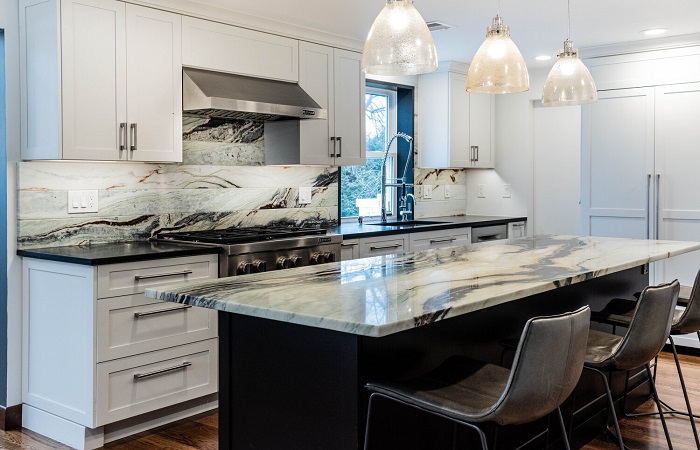
At first glance, the two materials can look either very similar or very different depending on the color, the pattern, and the finish. Quartz often has a high-gloss or polished surface finish, while solid surface countertops are often a little duller with a low sheen, but it is possible to find matte quartz and a highly polished solid surface. They’re just a little less common. Quartz is more likely to come in patterns that more closely resemble granite or marble. So if you want the look of natural stone in your kitchen, quartz is more likely to give you that look. However, solid surface countertops often have more subtle patterns and sometimes many more colors to choose from, so you can create a more unique or personalized look in your kitchen.
Quartz Appearance
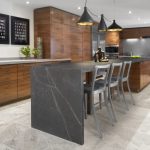
The biggest differences between the two in terms of appearance are in the details. Quartz slabs act a lot like granite or stone slabs. They’re heavy, solid, and either 2cm or 3cm thick at all points. They need to be cut and polished on their edges, so a sink is likely to be undermounted below the counter, with the edge polished up. If more than one piece is necessary for the installation, the two pieces will be butt-edged together and a seam will be created and filled with epoxy.
Solid Surface Appearance
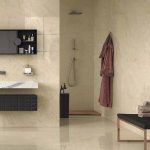
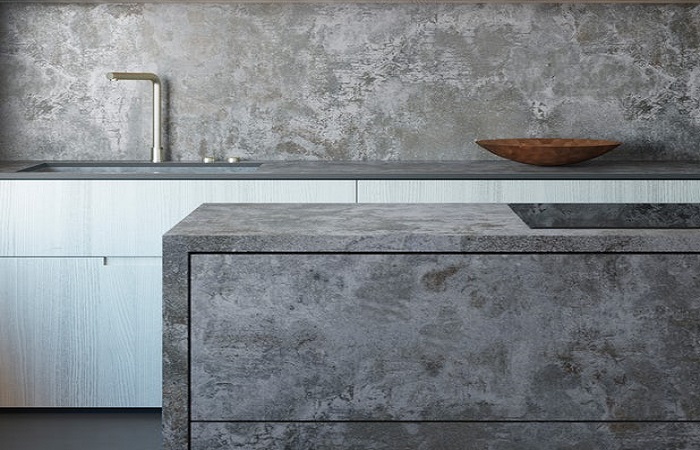
Solid surface countertops may be 2cm or 3cm thick, or they may be thinner with a thickened edge. They don’t have visible seams anywhere, because the material can be softened and melted with heat to blend two pieces together. So even a dramatically thickened edge or an extra-long countertop won’t have a seam. Because two pieces can be joined seamlessly, a solid surface countertop will often have an integral sink, or a sink made of the same material in a contrasting color.
Maintenance
Both materials are much lower maintenance than natural stone. They don’t require sealing or special cleaners, which makes their day-to-day care simple. Regardless of your decision between solid surface and quartz, you will have quality material for your kitchen countertops. Please have a good look at both their qualities, and then decide which one is best for you.
To learn more about us, click here.
Sources
hyundailncusa.com/blog/solid-surface-countertops-vs-quartz
www.usamarbleandgranite.com/solid-surface-vs-quartz-countertop/