

Introduction, Etymology, Geochemistry and Colors of Travertine
Travertine has been used as a key building material throughout the ages. It is a precipitate of hot springs. Travertine pavers present soft, neutral color tones and consistent, naturally formed holes that may penetrate the tile. These holes may be filled with grout upon install. Some travertine pavers can be prefilled during fabrication.
Definition of Travertine
Travertine is a terrestrial sedimentary rock, formed by the precipitation of carbonate minerals from solution in ground and surface waters, or geo-thermally heated hot-springs. It often has a fibrous or concentric appearance and exists in white, tan, cream-colored, and even rusty varieties.
Travertine Formation
As said before, travertine is a form of limestone deposited by mineral springs, especially hot springs. It is formed by a process of rapid precipitation of calcium carbonate, often at the mouth of a hot spring or in a limestone cave. In the latter, it can form stalactites, stalagmites, and other speleothems. It is frequently used in construction and building industry all over the world.
Travertine Colors
Travertine offers a stunning variety of natural colors. The colors include variations of beige, brown, taupe and even lustrous silver grey. The stunning variety of color options prove that this stone dominates with versatility in the world of design. Because travertine is a natural stone. It may have a high variation in coloration and movement. High variation means no two projects will ever be the same, even if the same stone is used. It is important to lay out your tile in the design you desire before it is installed to ensure you get the look you want.
Travertine Etymology
The word travertine is derived from the Italian root travertine. Travertino itself is a derivation of the Latin tiburtinus ‘of Tibur’. Its namesake is also the origin of Tivoli, a district near Rome.
Travertine Geochemistry
Modern travertine is formed from geo-thermally heated supersaturated alkaline waters, with raised pCO2. On emergence, waters degas CO2 due to the lower atmospheric pCO2, resulting in an increase in pH. Since carbonate solubility decreases with increased pH, precipitation is induced. Precipitation may be enhanced by factors leading to a reduction in pCO2.
Both calcite and aragonite are found in hot spring travertines; aragonite is preferentially precipitated when temperatures are hot, while calcite dominates when temperatures are cooler. When pure and fine, travertine is white, but often it is brown to yellow due to impurities. Travertine may precipitate out directly onto rock and other inert materials as in Pamukkale or Mammoth Hot Springs for example.
Uses of Travertine
Travertine is often used as a building material. The Romans mined deposits of travertine for building temples, aqueducts, monuments, bath complexes, and amphitheaters such as the Colosseum, the largest building in the world constructed mostly of travertine. The Shroud of Turin, when examined by Joseph Kohlbeck from the Hercules Aerospace Company in Utah and Richard Levi-Setti of the Enrico Fermi Institute, was found to contain particles of travertine aragonite limestone.
Travertine regained popularity as a building material in the Middle Ages. The central German town of Bad Langensalza has an extant medieval old town built almost entirely of local travertine. 20th Century buildings using travertine extensively include the Sacré-Cœur Basilica in Paris, the Getty Center in Los Angeles, California, and Shell-Haus in Berlin. The travertine used in the Getty Center and Shell-Haus constructions was imported from Tivoli and Guidonia.
Travertine Pavers
Travertine is one of several natural stones that are used for paving patios and garden paths. It is sometimes known as travertine limestone or travertine marble; these are the same stone, although travertine is classified properly as a type of limestone, not marble. The stone is characterized by pitted holes and troughs in its surface.
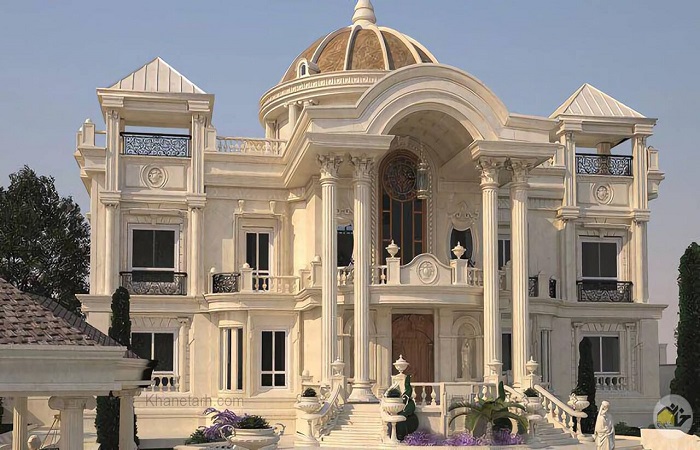
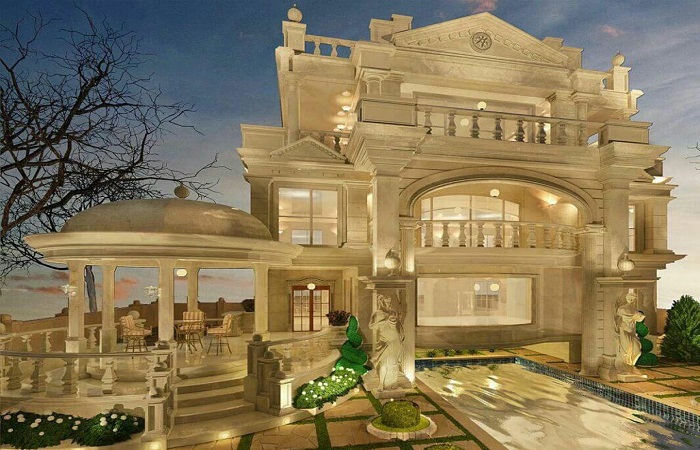
Although these troughs occur naturally, they suggest signs of considerable wear and tear over time. It can also be polished to a smooth, shiny finish, and comes in a variety of colors from grey to coral-red. Travertine is most commonly available in tile sizes for floor installations. Travertine is one of the most frequently used stones in modern architecture. It is commonly used for façades, wall cladding, and flooring.
To learn more about us, click here.
Sources
en.wikipedia.org/wiki/Travertine
www.tileshop.com/resources/what-is-travertine-tile
www.ecooutdoor.com.au/products/natural-stone-flooring/travertine-pavers/